Labor, automation and the real cost of every stem
Every stem tells the story of your labor, water, and time: the question is whether you're counting the cost or letting it eat your margin.
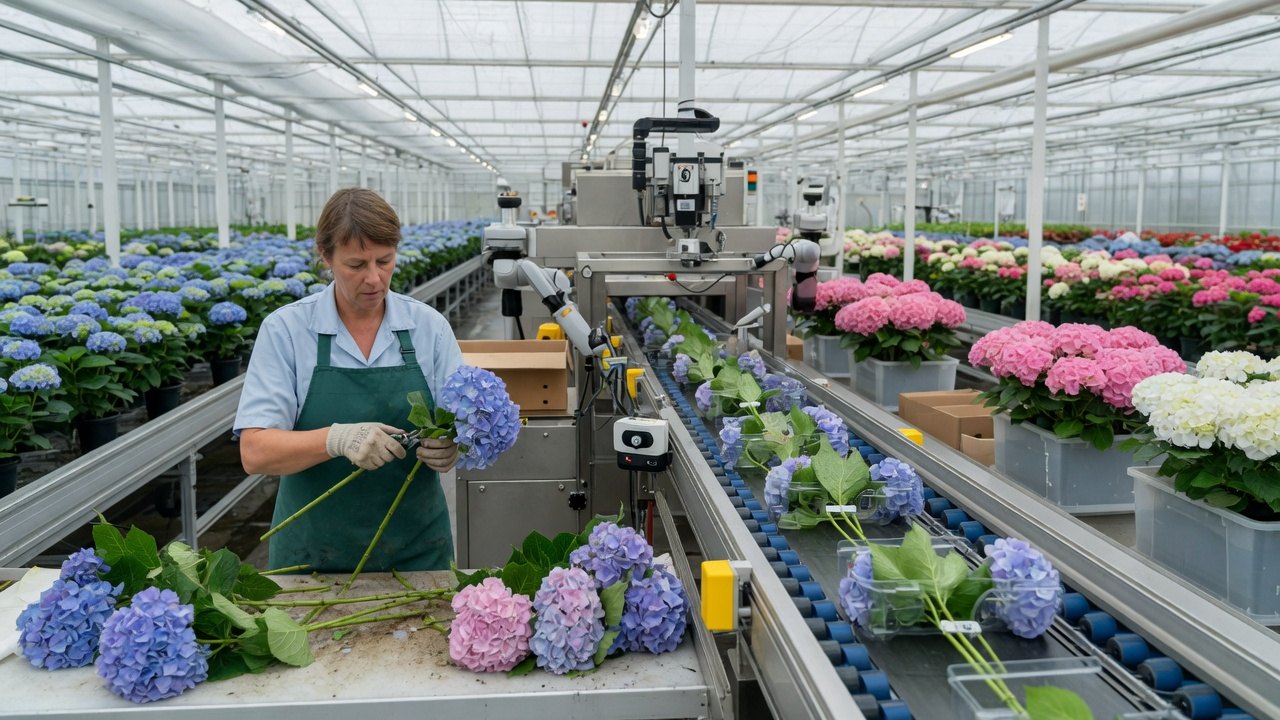
Every stem you cut carries a hidden price tag. That price is not just the cost of the young plant, the water, or the fertilizer. It is the labor you invested from propagation to packing. In hydrangea production, labor can account for 40 to 60 percent of total variable costs. Yet most growers track labor as a monthly overhead, not as a per-stem decision. That is a blind spot that costs real profit. The next generation of growers thinks differently. They break down every task into its cost per stem and then ask: can a machine do this better, or does this task need a human eye? This article is about that mindset shift and how automation, specifically computer vision sorting, fits into a cost-per-stem framework.
The real cost of every stem: why most growers lose money before they sell
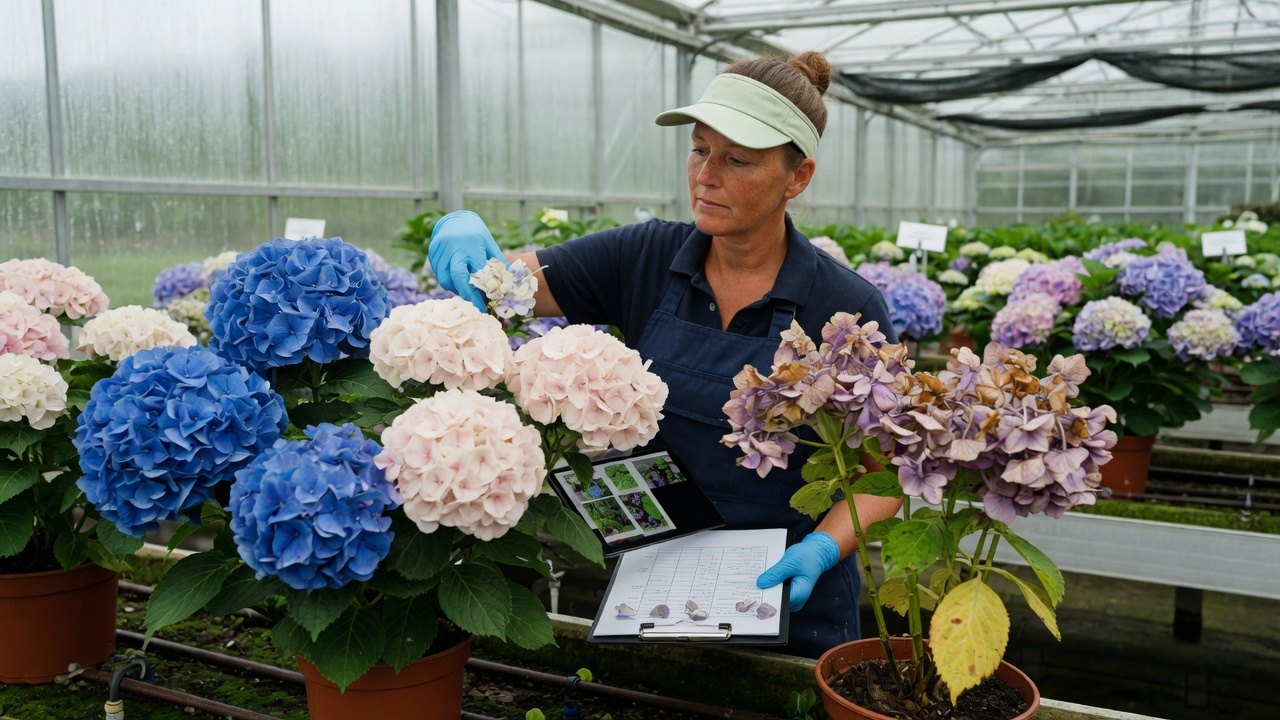
In our work with commercial hydrangea growers across Europe and Central Asia, we see a repeating pattern. Growers focus on yield per square meter and sale price. They ignore the cost of each stem that leaves the farm. The result: they may sell a stem for 1.50 euros, but after labor, water, heating, and waste, they net 0.20 euros or less. According to our data, 80 percent of flower growers lose profit through weak flowering, watering and fertilizing errors, incorrect cutting and storage, and color not matching market expectations. Each of these failures is a labor issue. Weak flowering often comes from poor pruning decisions. Watering errors come from inconsistent manual routines. Color mismatch happens when harvest timing is off. All of these are human decisions that can be improved with systems and, in some cases, replaced by automation.
Automation as a cost-per-stem investment: when does it pay back?
Automation is not a gadget. It is a capital decision that must be justified by a reduction in cost per stem. The first question is: which tasks have the highest labor cost per stem? For hydrangeas, the most labor-intensive tasks are sorting, grading, and packing. These tasks require consistent visual judgment and repetitive motion. They are also the tasks where human error is most costly. A misgraded stem may be sold at a lower price or discarded. That is pure waste. The IRISS computer-vision sorting system, developed by our technology partner 4MT, addresses this exact point. It scans each stem for stem length, head diameter, color uniformity, and defects. It sorts at speeds far beyond human capacity and with near-zero error. But does it pay back? The answer depends on your volume. For a grower producing 500,000 stems per year, the labor savings from sorting alone can justify the investment within two to three seasons. For a smaller grower, the payback may be longer, but the system also reduces waste and improves consistency, which lifts average selling price.
- Labor substitution. One IRISS unit can replace three to five sorters working an eight-hour shift. That is a direct labor saving of 40,000 to 80,000 euros per year in many markets.
- Waste reduction. Computer vision catches defects that human eyes miss, reducing waste by 5 to 10 percent. That is pure margin recovered.
- Premium grading. Consistent grading allows you to sell more stems in higher price tiers. A stem that would have been sold as 'standard' can be sold as 'premium' if it meets exact specs.
- Data feedback. The system records every stem's characteristics. That data helps you adjust cultivation practices to produce more stems in the high-value grades.
When automation does not pay: the human tasks that machines cannot replace
Not every task should be automated. Pruning decisions, for example, require understanding the plant's growth habit, the variety, and the market window. A machine cannot yet judge how many buds to leave for the next flush. Similarly, harvesting timing depends on weather, customer orders, and stem development. These are judgment calls that experienced growers make. Automation works best for repetitive, high-volume tasks with clear physical criteria. Sorting, grading, and packing are the prime candidates. Watering and fertilizing can be automated with sensors and dosing systems, but the decision of what to apply still requires agronomic knowledge. The key is to map your labor tasks, assign a cost per stem to each, and then evaluate automation only for the tasks where the cost is high and the decision is simple.
The grower who treats every stem as a data point, not just a product, is the one who will survive the margin squeeze.
The next-generation operating mindset: systems, not heroics
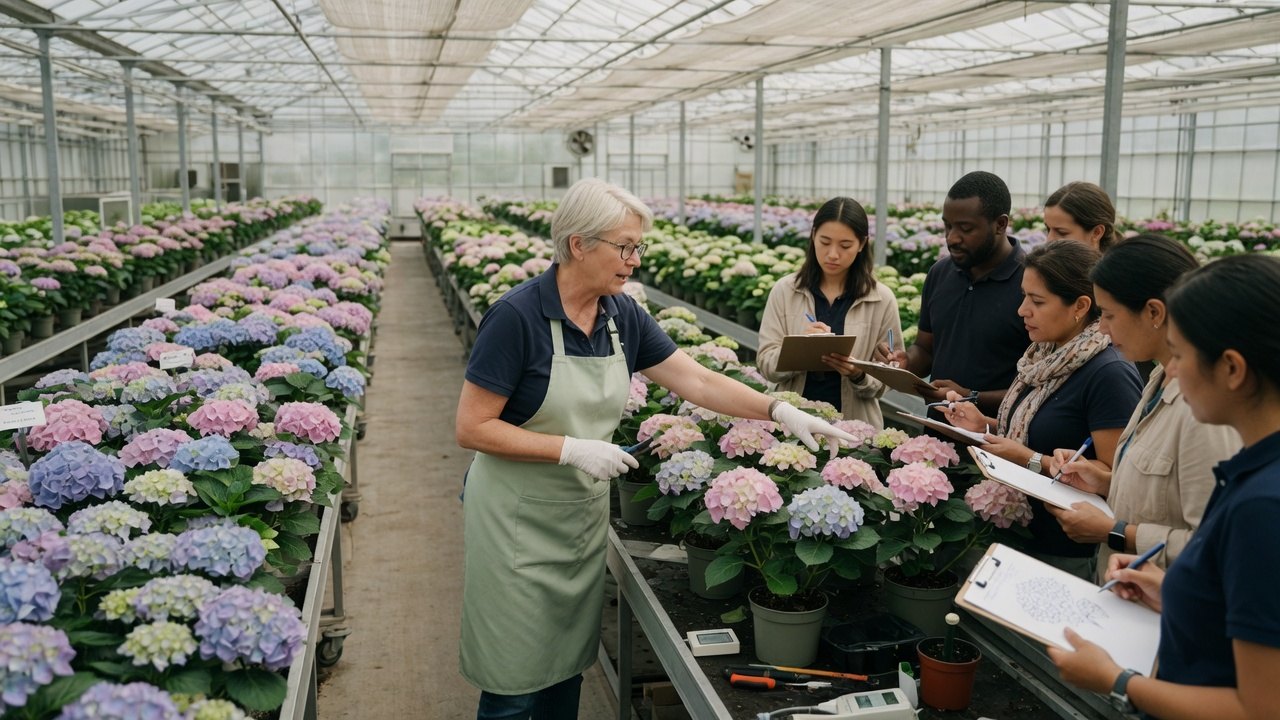
The real shift is not about buying machines. It is about adopting a systems mindset. That means documenting every process, measuring every input, and continuously improving. The grower who relies on one hero worker to make all pruning decisions is vulnerable. That worker may leave, get sick, or make an error. The grower who has a written pruning protocol, a training system, and a feedback loop is resilient. This is the philosophy behind our flagship course, Growing Hydrangeas for Cutting: from A to Z. It gives you a complete system for propagation, cultivation, pest management, harvest, and postharvest. It is built on the experience of third-generation Dutch grower Ard van Klaveren, who has bred his own cultivars and runs a commercial operation. The course is designed to help you escape the chaos of reactive decisions and build a predictable, profitable system.
Labor and automation are not separate topics. They are two sides of the same coin: the cost per stem. The next-generation grower tracks that number for every task and uses it to decide where to invest in people and where to invest in machines. If you want to learn how to apply this thinking to your hydrangea operation, explore our complete course. For a deeper dive into the business case, see our business case guide. The real cost of every stem is the cost of not knowing. Start measuring today.
Put this into practice
The flagship program turns thinking like this into a season-by-season system.
Explore the program