The four climate levers Dutch growers actually pull
Stop guessing. Dutch growers turn four climate levers to force hydrangeas into perfect color and predictable profit.
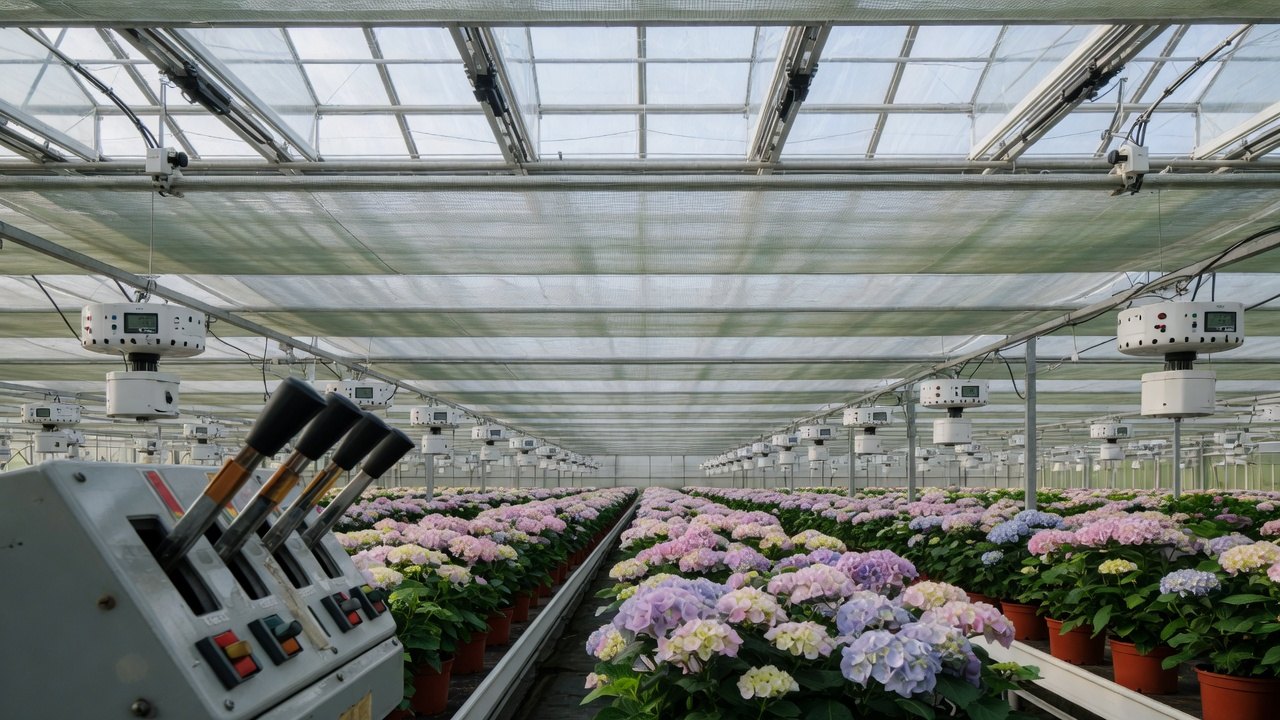
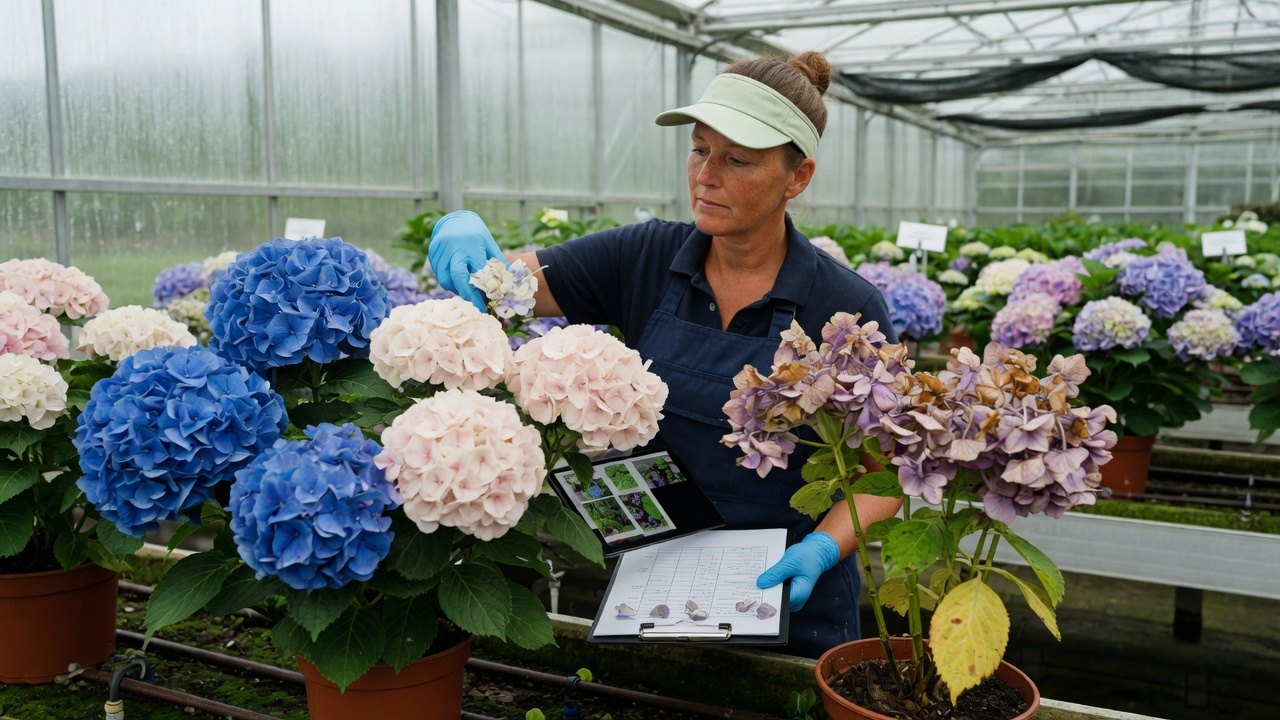
You have seen it: a block of hydrangeas that should pop with deep pink or electric blue, but instead fades to a muddy wash. The leaves are good, the stems are long, but the color is wrong and the flowers are weak. That is not bad luck. That is a climate error. In the Netherlands, growers do not blame the weather. They pull four levers: temperature, humidity (VPD), light, and CO2 with airflow. These levers are not theory. They are the difference between a crop that sells and a crop that gets discounted.
Temperature: The Color Thermostat
Hydrangeas are temperature sensitive in ways that most growers underestimate. The coloring phase, the last three to four weeks before harvest, is where temperature decides everything. If night temperatures stay above 18 degrees Celsius, anthocyanin production drops. The flowers stay pale. If nights drop below 14 degrees, development slows and you lose days.
The Dutch rule is simple: keep night temperature between 15 and 17 degrees Celsius during coloring. Day temperature can go to 22, but never above 25 for long. Every degree outside this band costs you pigment and stem strength.
- Night temperature. Set it at 16 degrees. That is the sweet spot for color development in most commercial cultivars.
- Day temperature. Cap it at 22 degrees. Above that, the plant shifts energy to cooling itself, not to flower quality.
- Soil temperature. Keep it below 20 degrees. Warm roots push the plant into vegetative mode and delay flowering.
- Differential. A 5 to 7 degree day-to-night difference is optimal. It mimics natural conditions and strengthens stems.
Humidity and VPD: The Hidden Water Pump
Relative humidity is not just about disease. It controls how the plant moves water and calcium. The Dutch measure Vapor Pressure Deficit (VPD). VPD is the difference between how much water the air can hold and how much it actually holds. A VPD of 0.8 to 1.2 kPa is ideal for hydrangeas. Below 0.3, the plant stops transpiration. Calcium stops moving. You get weak cell walls, soft stems, and bract edge burn.
Growers who ignore VPD lose 10 to 15 percent of their crop to quality issues that look like disease but are actually a water balance problem. The fix is not a chemical. It is ventilation and dehumidification.
- Day VPD. Target 1.0 to 1.2 kPa. This drives transpiration and nutrient uptake.
- Night VPD. Target 0.5 to 0.8 kPa. Lower is fine, but below 0.3 is dangerous.
- Humidity spikes. When RH hits 90 percent, open vents or run dehumidifiers. Do not wait.
- Calcium delivery. Low VPD stops calcium. Without calcium, flowers are soft and short-lived.
“We started spending less and earning more, because we stopped fighting the climate and started steering it.” ; Abdulla Khadziev, greenhouse complex manager, after implementing Dutch climate protocols.
Light: The Energy Signal
Hydrangeas are not high-light plants, but they need consistent light to drive photosynthesis and color. The Dutch target a Daily Light Integral (DLI) of 10 to 14 mol per square meter per day during the coloring phase. Below 8 mol, the plant weakens. Above 16 mol with high temperatures, you burn leaves and bleach color.
In low-light seasons, supplemental lighting is not optional. A 100 micromol per square meter per second LED top light for 12 hours can lift DLI by 4 to 5 mol. That is enough to keep color development on track. But light without temperature control is wasted. Light drives photosynthesis only if temperature is in the right range.
- Minimum DLI. 8 mol per square meter per day. Below that, expect weak flowering.
- Supplemental light. Use LEDs with a spectrum rich in red and far-red. That improves stem elongation and flower size.
- Photoperiod. Hydrangeas are day-neutral for flowering, but longer days (14 to 16 hours) can push growth. Keep it consistent.
- Shade. Above 600 W per square meter solar radiation, shade cloth is necessary to prevent heat stress.
CO2 and Airflow: The Growth Accelerator
CO2 is the gas that turns light into sugar. In a closed greenhouse, CO2 levels drop to 200 ppm during the day. That starves photosynthesis. Dutch growers inject CO2 to maintain 800 to 1000 ppm. The result is 20 to 30 percent faster growth and denser flowers. But CO2 only works if air moves. Stagnant air creates microclimates where humidity builds and CO2 sinks. Horizontal airflow fans keep the air mixed so every leaf gets fresh CO2 and even temperature.
Airflow also prevents botrytis. Hydrangeas are prone to botrytis on the petals and stems. Good airflow keeps the leaf surface dry and stops the fungus from germinating. The rule is 0.3 to 0.5 meters per second air speed at canopy level. Not a hurricane. A steady breeze.
- CO2 target. 800 ppm during daylight hours. Do not inject at night or when vents are open wide.
- Air speed. 0.3 to 0.5 meters per second. Measure at canopy level, not above.
- Fan placement. Horizontal fans every 8 to 10 meters. Overlap the air streams to avoid dead zones.
- Ventilation. Even in winter, exchange air at least once per hour to remove ethylene and other harmful gases.
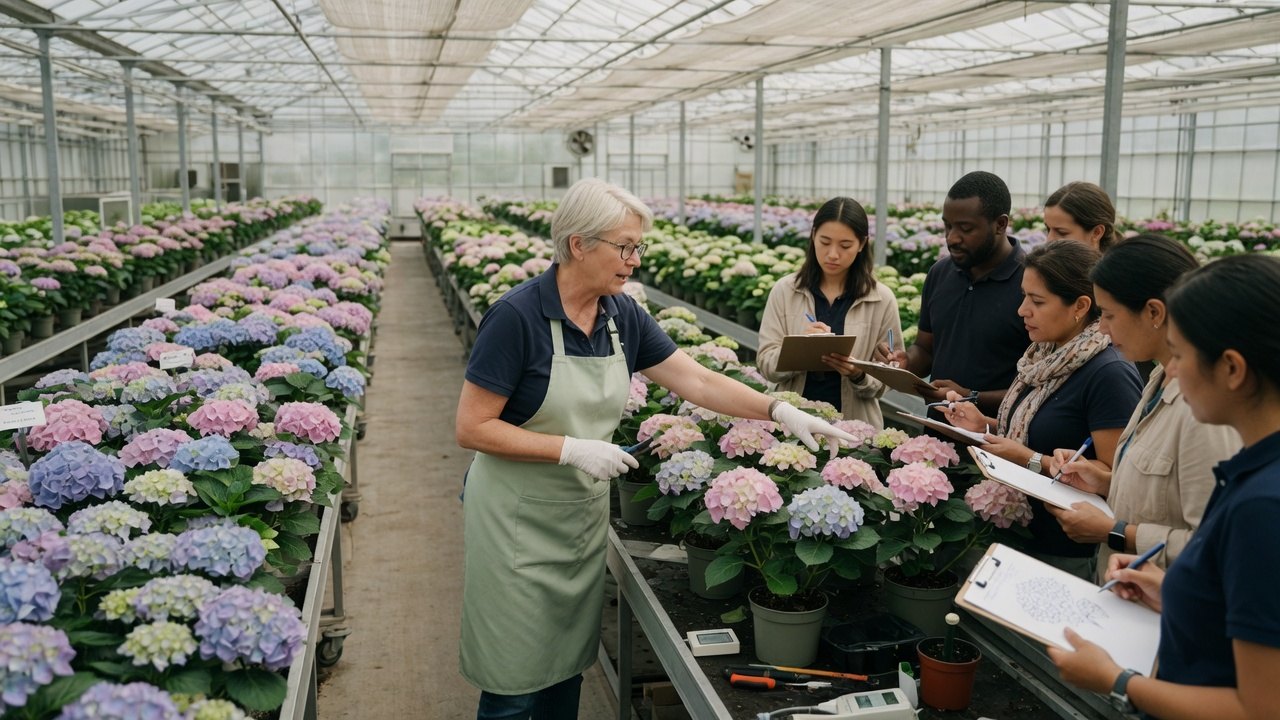
These four levers are not complicated, but they require discipline. Temperature, VPD, light, and CO2 with airflow form a system. Pull one without the others and you lose the balance. Dutch growers learned this over decades. You can learn it in weeks. Start by measuring what you can. Then adjust one lever at a time. If you want a complete system, the Growing Hydrangeas for Cutting course walks you through every step. For a deeper look at the business case, see the numbers behind the system. Or take the free diagnostic quiz System or Chaos? to see where your greenhouse stands.
Put this into practice
The flagship program turns thinking like this into a season-by-season system.
Explore the program