The fertigation recipe that quietly decides your flower quality
A precise fertigation program is the hidden lever that separates premium Dutch hydrangeas from average blooms, and it starts with knowing your EC and pH numbers.
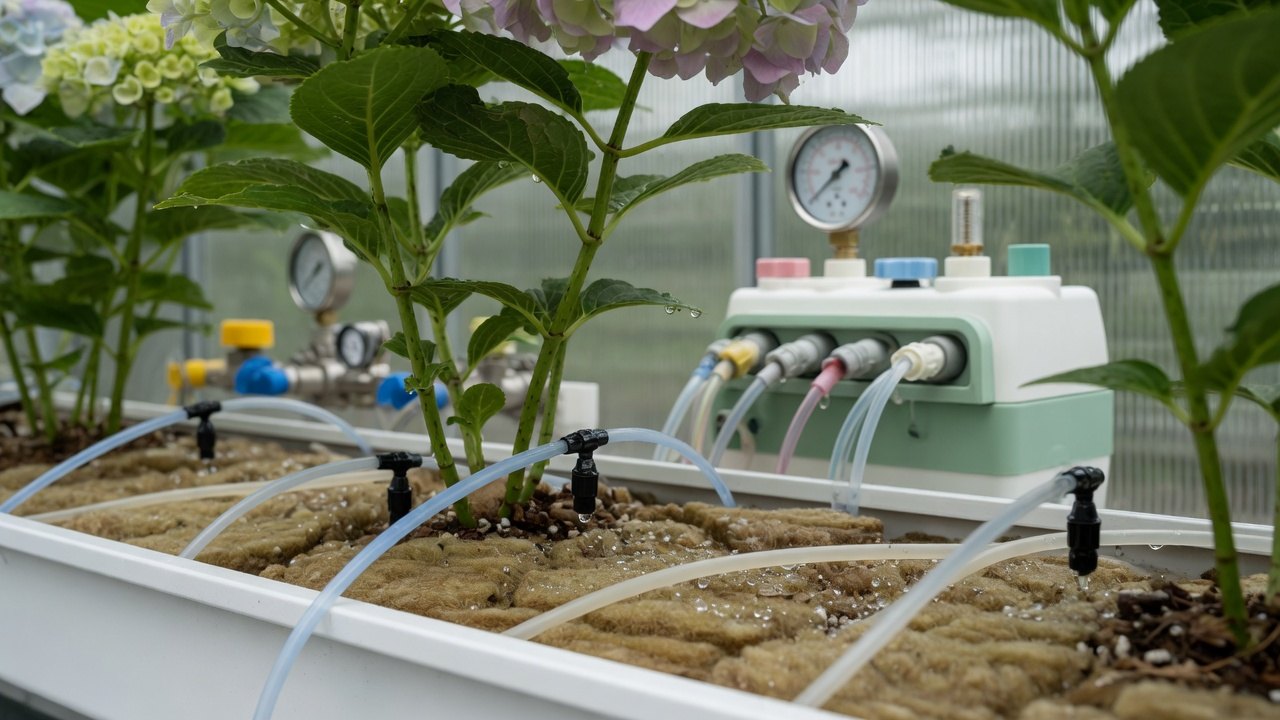
Every hydrangea grower knows that water and fertilizer are the lifeblood of the crop. But the difference between a premium bloom that commands top dollar and an average flower that barely covers costs often comes down to something invisible: the fertigation recipe. At Van Klaveren Plant, we have spent decades refining the exact balance of EC, pH, and feed timing that separates Dutch quality from the rest. And I can tell you, feeding by feel is a fast track to leaking margin.
The numbers that matter: EC and pH
EC, or electrical conductivity, measures the total dissolved salts in your irrigation water. For hydrangeas, the target range is narrow: 1.2 to 1.8 mS/cm during active growth, depending on the cultivar and stage. Above 2.0, you risk root burn and stunted flowering. Below 1.0, plants starve. pH must stay between 5.5 and 6.0 to keep iron and other micronutrients available. Many growers neglect pH and wonder why their leaves turn yellow.
- EC too high. Roots cannot absorb water properly. Leaves wilt despite wet soil. Flowers fail to size up.
- EC too low. Plants are hungry. Stem strength drops. Color development suffers.
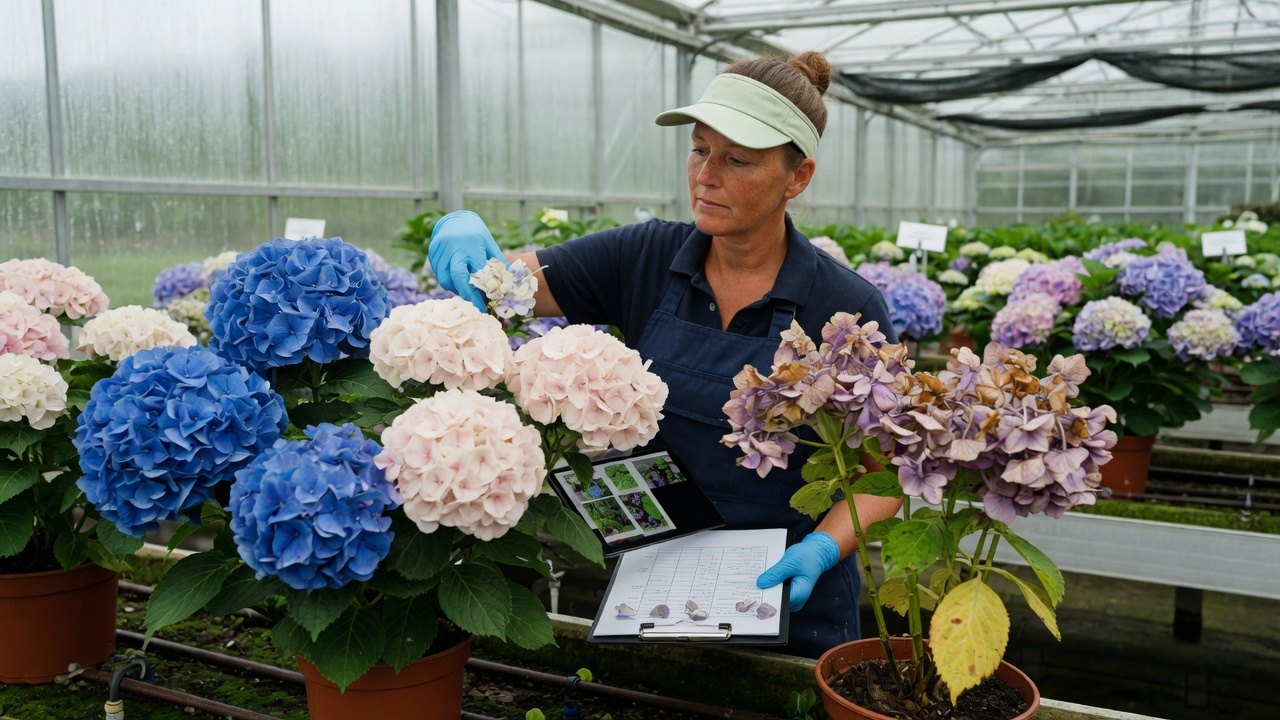
- pH drift. At pH above 6.5, iron locks out. The telltale sign is interveinal chlorosis on new leaves.
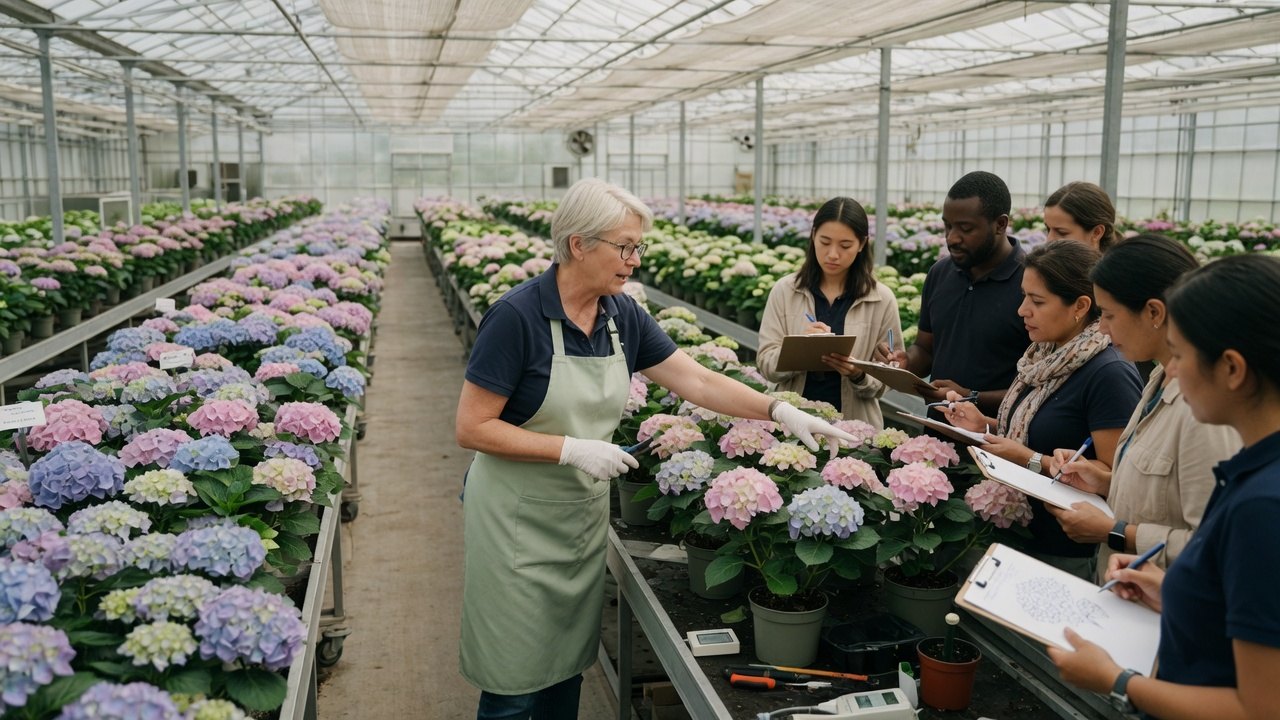
We test our irrigation water every single day. It takes five minutes with a handheld meter. That five minutes is operational insurance against a month of lost quality.
Feed timing: when you apply matters as much as what you apply
Hydrangeas are not constant feeders. They have distinct phases: vegetative growth, bud initiation, flower development, and maturation. Each phase requires a different ratio of nitrogen, phosphorus, potassium, and calcium. For example, during bud initiation in early spring, we reduce nitrogen and increase phosphorus and potassium to encourage flower set. If you keep feeding high nitrogen, you get lush leaves but no flowers.
Our written fertigation program breaks the season into six stages. Each stage has a specific recipe that we follow without deviation. That program is the result of 25 years of trial and error. It is not something you can guess. When I see growers mixing fertilizer by eye or by feel, I know they are leaving money on the table.
“Feeding by feel is not a technique. It is a gamble. And in commercial horticulture, the house always wins.”
How a written program protects your margin
A written fertigation program is your insurance policy against variability. It eliminates the human error of a tired morning or a distracted assistant. It ensures that every plant gets exactly what it needs, exactly when it needs it. And it gives you data to troubleshoot when something goes wrong.
Consider this: 80% of flower growers lose profit through weak flowering, watering and fertilizing errors, incorrect cutting and storage, and color that does not match market expectations. Most of those errors trace back to inconsistent fertigation. A written program, combined with regular EC and pH checks, closes that gap.
From recipe to routine: the next step
Implementing a precise fertigation program is not complicated. It starts with a simple logbook. Write down your target EC and pH for each growth stage. Then measure and record what you actually apply. After one season, you will have a personalized baseline. From there, you can fine-tune.
If you want to go deeper, our flagship course Growing Hydrangeas for Cutting: from A to Z includes a full module on fertigation. We walk through the exact recipes we use at Van Klaveren Plant, including how to adjust for different cultivars and local water quality. The course also covers the upstream decisions that make fertigation work: variety selection, greenhouse climate, and monitoring tools like the IRISS computer-vision system from our partner 4MT.
Your fertigation recipe is quietly deciding your flower quality every single day. Make it a written, measurable, repeatable process. Your bottom line will thank you. To see how fertigation fits into the bigger picture of a profitable hydrangea business, explore our business case or contact us for a personalized consultation.
Put this into practice
The flagship program turns thinking like this into a season-by-season system.
Explore the program