Khao soi
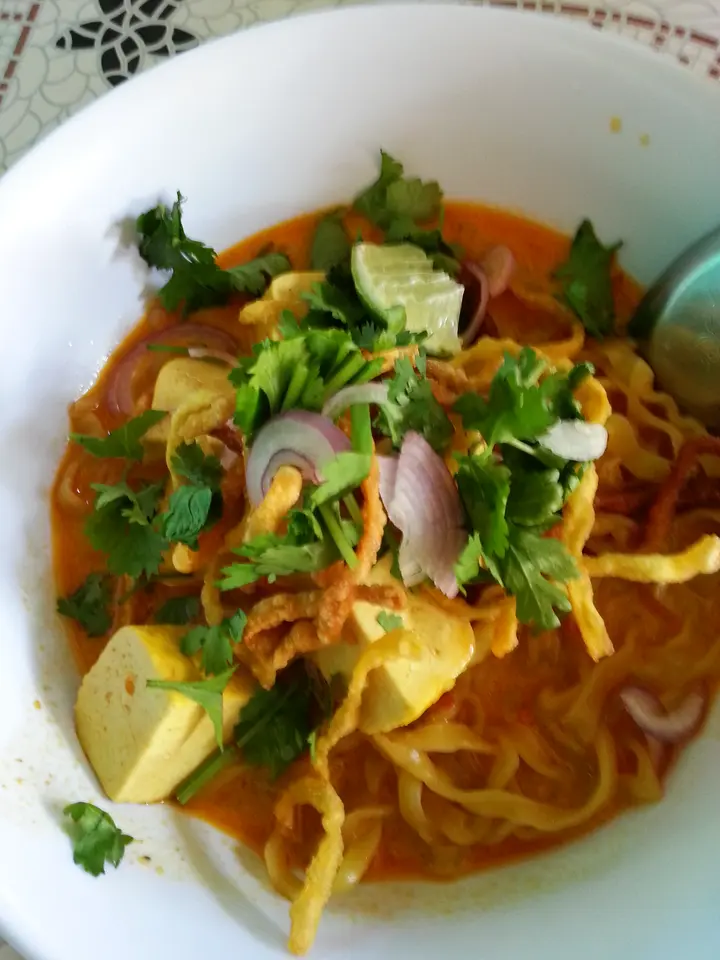
Egg noodles in a turmeric yellow coconut curry, crowned with crispy noodles, with shallot, pickled greens and lime on the side. It is in virtually every town in Mae Hong Son. Food writer Austin Bush believes it may be a Shan dish brought from Myanmar by Muslim traders. Saeng Thong market has a takeaway khao soi stall, and Set C of Thom’s class is built around it.
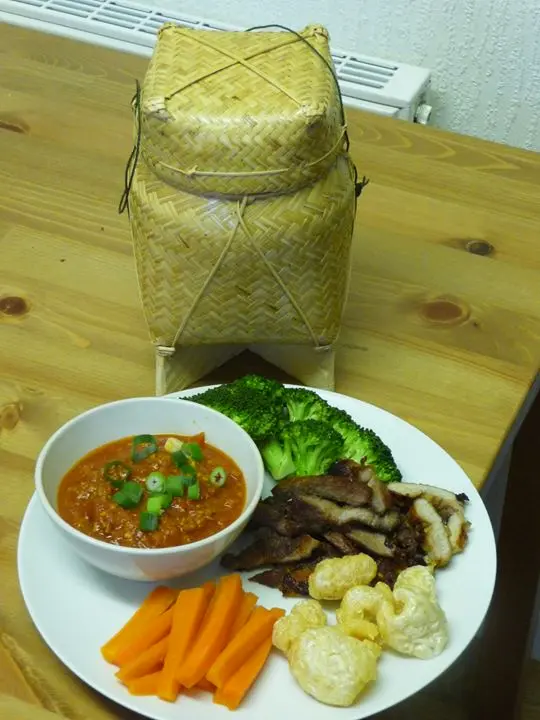
Nam phrik ong and pork crackling
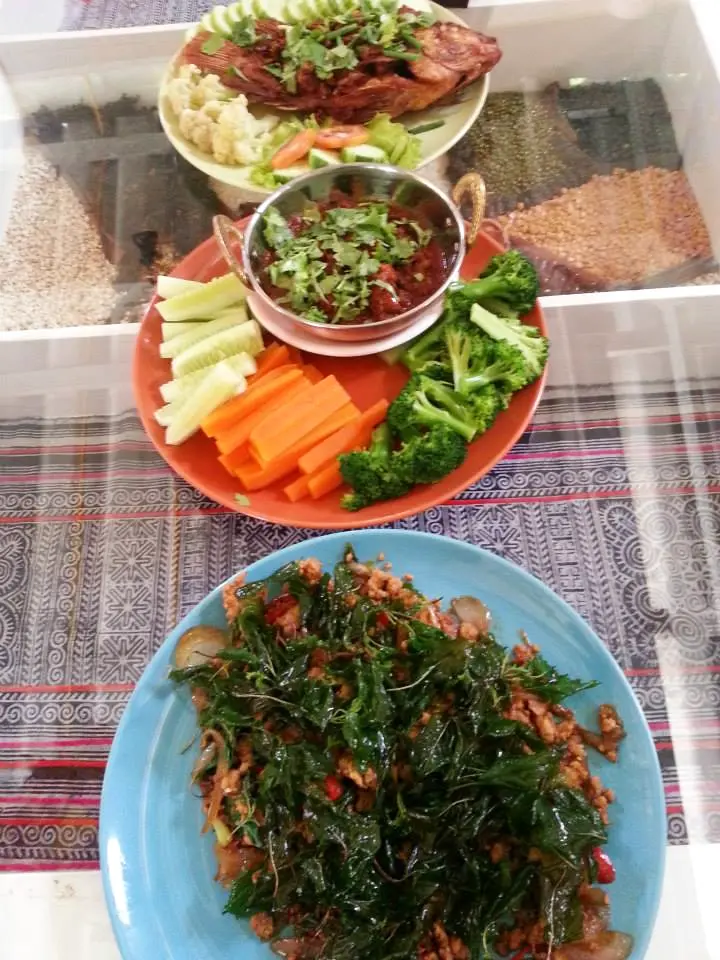
A thick red chilli dip of Shan origin, made with makhuea som, tiny sour tomatoes. It comes with raw and blanched vegetables and deep fried pork crackling for scooping, and is eaten with sticky rice.
Sticky rice
The rice of the north, rolled into a ball with your fingers and used to pick up everything else. In Mae Hong Son it is sometimes sold wrapped in a teak leaf.
Shan and Mae Hong Son flavours to look for
- Thua nao, dried discs of fermented soybean, used in Mae Hong Son the way shrimp paste is used elsewhere in Thailand.
- Thick, oily curries, which Austin Bush calls typical of Shan cooking, and kaeng khanun, a curry of young jackfruit.
- Aep, curry paste and meat wrapped in banana leaf and grilled.
- Dok khaan, edible flowers Austin Bush found at Pai’s evening market and in local salads.
The Walking Street, every evening
From about six o’clock, the streets around Chaisongkram Road fill with food stalls: grilled skewers, northern sausage, roti, fruit shakes and dumplings. Thom’s evening food tour ends here, and the street starts 195 metres from her kitchen. For something completely different, Cheese Madness grills toasties right on the Walking Street.
Cook it yourself
The fastest way to understand Pai’s food is to make it. In Thom’s class you pound khao soi, Massaman or red and green curry paste by hand, then cook the dish at your own station. See every dish.
Sources. Austin Bush, The Food of Mae Hong Son (austinbushphotography.com); Visit Thailand Today (Saeng Thong market); Thom’s booking page. Read 14 November 2026.